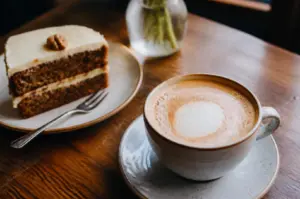
The coffee was good.
I should probably start there, because that is what people expect me to remember. The origin. The roast. The temperature. The polite language of tasting notes.
But I remember the wall.
I didn’t come for the coffee this time follows that same shift, when the drink fades and the room becomes the thing that stays.
The Detail That Refused to Leave
It was not even a beautiful wall.
Not in the obvious way.
It had texture. Uneven paint. A small shadow where the afternoon light failed to reach properly. The kind of surface most people ignore because it does not announce itself.
But I kept looking at it.
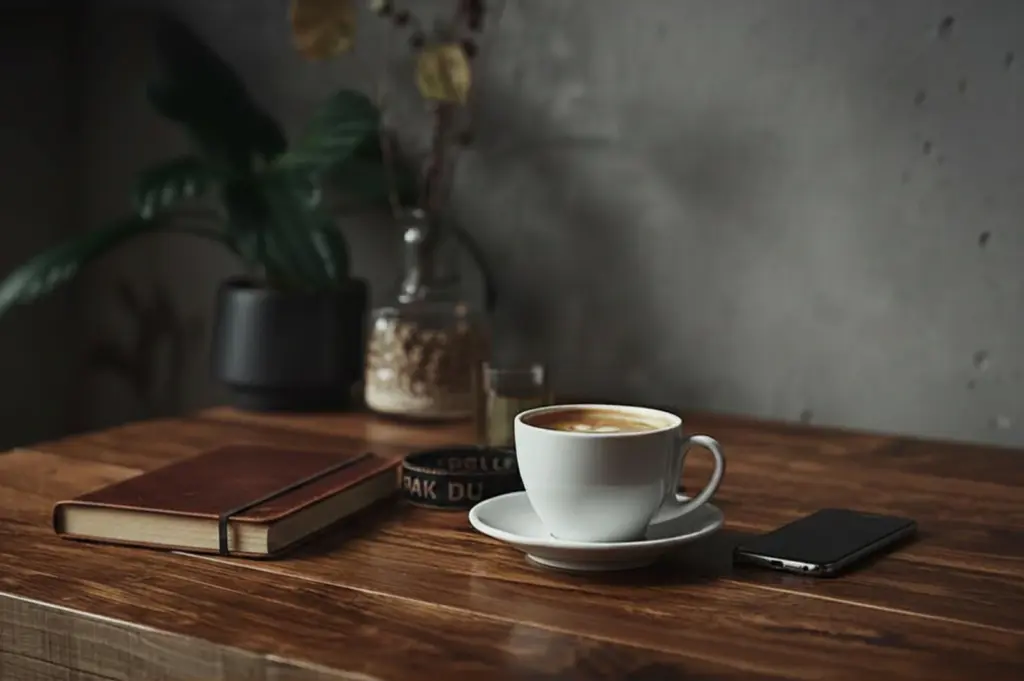
The cup sat in front of me, warm and carefully made, yet my eyes kept drifting past it. Toward the grain, the marks, the quiet evidence that the room had a life before I entered.
Why Texture Matters More Than Taste Sometimes
Taste disappears quickly.
Even a good coffee becomes memory after a few minutes. You can describe it, but you cannot fully return to it.
Texture stays longer.
A rough wall. A dark corner. A low ceiling. These things hold atmosphere in a way flavor often cannot. They give the cafe weight. They tell you whether the space wants to comfort you, expose you, or leave you slightly unsettled.
That is what I look for now.
Not just what the cafe serves, but what it leaves behind.
Learning to Photograph What Lingers
A cafe photograph should not only say, “The coffee was good.”
It should say, “Something happened here, even if nothing happened.”
That is where walls become important. They catch shadows. They absorb silence. They make the room feel older than the menu.
The coffee was good.
But the wall stayed with me longer.
And maybe that says more about the cafe than the cup ever could.
That is the strange habit of being a Cafe Photographer.